
“The future of music may not lie entirely in music itself, but rather in the way it encourages and extends, rather than limits the aspirations and ideals of the people, in the way it makes itself a part with the finer things that humanity does and dreams of.”
– Charles Ives, New Music
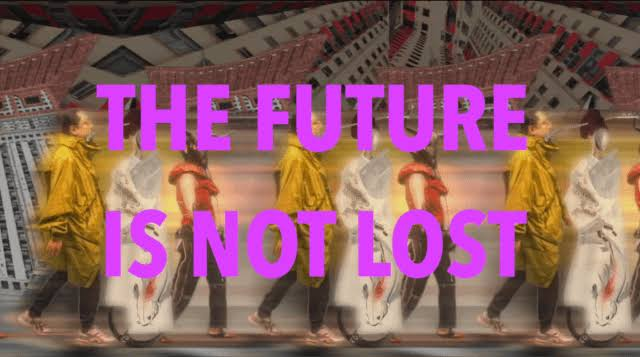
As we move towards the third decade of the 21st century, what has become of the music of the future? This was one of the questions that the first section of my book The Future is Not Lost tried to anticipate. The main protagonists of the book’s first section are SOPHIE, Arca, and Iglooghost. These were the three artists who, at the turn of the 2020s, sprung to mind to serve as a counterbalance to Fisher’s hauntology, pushing popular music into the future rather than rehashing the past.
However, although the book was released 2 months ago, the anti-hauntology essays were conceived between 2021 and 2023. This temporal disparity is a difficult predicament for a book about ‘The Future’ to be born out of, especially in the case of music culture where things move so fast. A recent comment on Simon Reynolds’ blog post about my book argued that we’ve already moved past the point where the artists mentioned could be considered futuristic: “As far as Arca, Sophie, and Iglooghost being artists that point to the future, that was absolutely the case 10-13 years ago when these artists were hitting the scene. But we are far removed from that moment. A decade is an eternity in music.”
So, what exactly has happened this decade? The world has changed in so many ways that a whole set of new questions start to emerge. How much has the musical landscape evolved in the last 5 years since anti-hauntology was first coined? Has the future of music been lost into the abyss of generative AI? Is there no longer even a sound of the present?
This article will therefore be the first of three that will attempt to address our current decade head on. The first will ask not simply whether the 2020s has produced a sound of its own, but how we come to recognise a particular sound as belonging to an era in the first place. The second will look at the work of Holly Herndon and the increasing role of AI in the music industry. And the third will turn the clock back on the anti-hauntology debate of 2021 to show how we can move past the work of mourning to push music culture into the future again.
The ‘Long’ Decade of Hyperpop
Curiously enough, almost at the exact time The Future is Not Lost was released, Resident Advisor put out a video that has been causing quite a buzz over the last few months. The video claims that there is no sound of the 2020s, at least not yet. It argues that the 2020s has been an unusual decade in that there have been no strong claims to a sound that represent the era as a whole. Have we once again reached a point of musical stagnation where the sounds of the new are being constrained by the wider cultural landscape? (This sounds all too familiar, doesn’t it?)
There are a lot of things I could go into in the video, but I want to focus on one claim which brings into question the very idea of a ‘sound’ of the decade. It’s not just that there is no sound of the 2020s, it’s that hyperpop was apparently the sound of the 2010s. This immediately struck me as strange. After all, the genre wasn’t even named hyperpop until 2019, so how could it be the sound of a whole preceding era? And if that is the case, maybe the music of the 2020s will only be recognised after the current era has passed…
This is a point that the longer form article by Gabriel Szatan addresses in more detail. Szatan’s piece is a fantastic read and makes a much stronger case for the lack of a cohesive sound of the 2020s than the shorter-form video. He goes into a lot of detail addressing the specific material and cultural conditions that make this current decade of electronic music different, notably accessibility crises, resistance from gatekeepers, and a fragmented new generation. To Szatan, in our current era, when scenes do emerge in various parts of the world they are often too distant or context-reliant to appeal to any but the most invested listeners. “That’s a clear thread tying together the 2020s to date” he writes.
However, he also makes a subtle case for cultural significance of hyperpop, not just as the sound of the 2010s, but of the 2020s, which once again brings this idea of a ‘sound of the decade’ into question:
“For all the ways hyperpop and &&&&&-style hyperreal electronics riffed it still landed as a clean break, repositioning electronic pop around textures and transhumanist desires largely absent from the contemporary lexicon. Through faceshopping and digital interfacing, its first-wave icons updated the electronic principle of ‘becoming one with the machine,’ extending it far beyond rigging up a 303 and 707. More importantly, it was the first electronic movement in decades to be spearheaded by queer and femme producers. Its influence has rippled for so long now that the 2020s may actually be typified as an extended hyperpop era.”
This is a key point. Hyperpop, and other genres, are not always created, recognised, disseminated, and consecrated in the same decade. The techniques created by the initial progenitors have a knock-on effect that is far wider reaching than typical decadal boundaries would allow. To understand why, consider the historical analysis of Eric Hobsbawm, who claimed that centuries could be categorised as ‘long’ or ‘short’ based on the historical events that defined them. To Hobsbawm, the rigid 100 year mark created artificial boundaries that were not reflective of real world events—oftentimes the lives of people living either side of a century would be virtually identical, and the key defining features of an era would sit at other crucial points in time. For example, the ‘long’ 19th century began with the French Revolution in 1789 and only ended with the beginning of the first world war in 1914. On the other hand, the ‘short’ 20th century continued from the first world war up until 9/11. If this logic applies to centuries, it can certainly apply to decades. Perhaps we’re living through the end of a ‘long’ 2010s, with hyperpop’s influence extending deep into the 2020s.
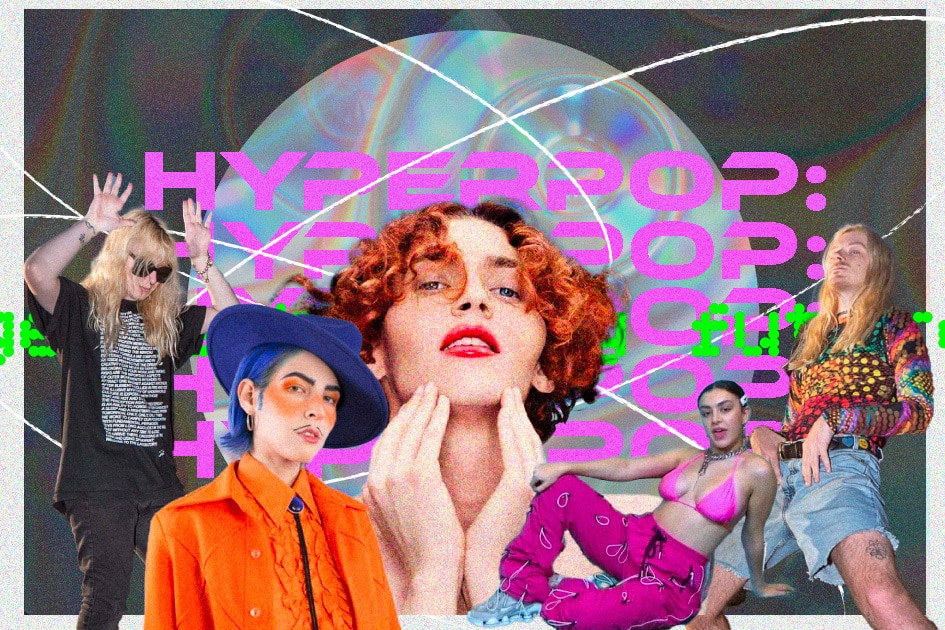
From the perspective of 2026, we can identify that the early sounds of the hyperpop spectrum (bubblegum bass, PC Music, deconstructed club etc.) were the primordial soup from which a whole host of other new and innovative genres have emerged, and I think we’re already seeing this with the deluge of hyperreal ‘zoomer electronics’ that the current decade has produced so far. We only need to look at the success of 2hollis, Jane Remover, Fakemink, or even Bladee to see hyperpop’s fingerprints over virtually everything in the 2020s: vocal processing, hyperreal aesthetics, digital maximalism, transhumanism, genre-bending. Hyperpop’s production language has become the default dialect for young artists expressing their own digital milieu.
However, this wouldn’t have been possible without a specific convergence of factors. Without artists like SOPHIE and their anti-hauntological tendencies pushing music toward the future, these sonic possibilities wouldn’t have existed. And crucially, without the pandemic, which dragged the 2010s into the 2020s and created a period of isolation and hyper-digitalisation, these ultra-synthetic sounds might never have become ingrained in the cultural consciousness. The post-COVID 2020s was the beginning of a new world; we picked up pieces of the old world and stitched them together through a period of digital saturation that allowed hyperpop’s language to permeate everything.
But it’s not just from the bottom up that hyperpop has taken hold in the 2020s. Let’s not forget that this was the decade that a US presidential hopeful’s marketing team embraced the aesthetic of Brat in an attempt to connect with the online masses. In fact, the whole Brat phenomenon of 2024 will probably be looked back on as one of the most significant musical crazes of the decade. During the summer of 2024, Brat was pretty much inescapable—and this was an album produced by chief hyperpop architect A. G. Cook, and which contained a song mourning SOPHIE (something I’ll come back to in a later article). Hyperpop had moved from a loosely connected collection of sounds to a mode of cultural production that operated across different platforms, even in the most cynical sense as with the Kamala Harris campaign. So, despite emerging years before, the 2020s has been the period where the production language of hyperpop went mainstream; and it is that language that may well end up being one of the defining sounds of the decade.
Decadeology and Archive Fever
So if we take this idea seriously, where do we end up? The sounds of the 2020s may extend backward into the 2010s, creating what we might call a ‘long decade’ of hyperpop influence. However, whether or not hyperpop defines the era relies on something deeper than the specific music that was created: it relies on what gets remembered, and how it gets remembered. Szatan’s argument also touches on this. It’s not just the sounds that emerge in a particular era, but the material and cultural conditions that determine what gets archived and preserved.
Here he argues that one of the defining features of the 2020s electronic music is its optimisation for transience. It’s not only possible, but probable, that a whole host of good music could be lost forever through infinite scroll, or that musical scenes which emerge may optimise themselves for short form content in a way that is one step away from ‘short-form-focused brain rot music’:
“Ultimately, the transience of all this worries me. The system we operate in today is not only disjointed and corporatised; worse, it’s allowing creativity to escape into the air without capture. Who will document it? Are there going to be compilations and compendiums as there were before? We all hope that the most exciting tunes are not only out there, but should find their way to us in the end. The many ways music is upped, dumped and forgotten about these days, like digital debris swilling around the ocean, makes that feel unlikely.”
The hyper-individualism of the current algorithmic system creates a situation where scenes and genres are not archived in the same way as they once were i.e. a way that creates a collective and shared understanding of the past. Our current milieu instead becomes a series of transient and hyperspecific micro-pasts which would segregate each individual from the wider collective, and, in turn, lead to an increasingly atomised world of cultural malaise. There’s no doubt we’ve seen this happen in the political sphere, but is the same happening in culture? What happens when our digital archives themselves start to prevent the emergence of cohesive and unified sounds and their respective scenes?
Szatan develops this idea further in No Music on a Dead Internet, the companion piece to There Is No Sound Of The 2020s. Yet.:
“Collective memory is leaking out. We tend to consider the ephemerality of global electronic music, which often gestates through WhatsApp, memory cards or pirate markets, as priced in. But ever more micro-scenes are being lost to time without preservation—killer music that never finds a home in the present, nor survives for those looking for it down the line.
Having wriggled free of analogue record-keeping, we’ve somehow wound up in a worse state than ten or 15 years ago. There are no guarantees that knowledge we’ve amassed is going to make it intact to those who will power the industry in the 2030s. You hear a lot of static about the lagging cultural awareness of Zoomers, but it’s noisy enough to eclipse the real question: is there not an imperative to pattern up and build a stronger bridge from the past to the future?”
I’d argue that this imperative is undeniable and is at the core of my argument in The Future is Not Lost. In fact, the whole phenomenon of archiving culture, or even organising it into neat decades, brings up a curious philosophical problem hinted at the end of the quote above—it concerns not only how we view the past, but how we invent the future. This is one of the key points discussed by Derrida in his 1995 book Archive Fever. To Derrida, the archive is quite literally a matter of determining the informational conditions of the future:
“[T]he question of the archive is not, we repeat, a question of the past. It is not the question of a concept dealing with the past that might already be at our disposal or not at our disposal, an archivable concept of the archive. It is a question of the future, the question of the future itself, the question of a response, of a promise and of a responsibility for tomorrow. The archive: if we want to know what that will have meant, we will only know in times to come” (AF, 36).
So, when we attach a particular cultural form to a particular decade, what we are doing is not just organising the past, how it looks, and how it’s accessed. We are also projecting a new idea of how that past will look far into the future. As I mentioned in the previous section, hyperpop did not formally ‘exist’ until the unification of the genre created by a playlist in 2019. In this case, the playlist/archive retroactively connected different scenes and genres into a unified term. The archive doesn’t just preserve the past, it quite literally invents the future. The archive is the bridge from past to future.
This idea is something that Szatan does anticipate to some degree when, towards the end of the first article, he writes:
“Perhaps the true sound of the 2020s will reveal itself in 2040, some Gauguin or a Klint thrust into vogue decades after production halts. It certainly sounds nice. But my hunch is we don’t have time to wait that long. For a system struggling to amplify anything new, it feels incumbent on us all, especially those in the industry’s swollen middle band, to shift our weight and think seriously about how to support the next breakthrough. Even at a time of collective exhaustion, to attempt no crossover, make no entreaties or reshuffle the pack if it comes to it, would be an error of judgment.”
Here, I couldn’t agree more. Not that the sound of now will only be revealed in the distant future, but for all of us to think seriously about how to support new sounds that emerge. The role of the critic and the commentator is dwindling in some respects, but perhaps due to the increasingly ephemeral archiving mentioned above, those of us who write about music will play an even more important role in the future. We are archiving the present to provide the bridge between the past and future.
Overcoming Cultural Doomerism
Now, we may accept the role of critic and the archivist in the development of music culture, but is this apparent optimism warranted, or does Szatan’s diagnosis of cultural exhaustion reflect a genuine, irreversible crisis? I think it’s clear that we are mostly in agreement, but I also think it’s important to note that the very act of stating that ‘there is no sound of the 2020s’ mid-way through the decade is an all too familiar argument about culture that’s come up again and again throughout the last 50 years. In a worst-case scenario, this kind of pessimism can become a self-fulfilling prophecy that only reinforces our culture’s doomer tendencies. The real question isn’t whether Szatan’s obstacles are real (they certainly are: accessibility crises, resistance from gatekeepers, a fragmented new generation). The question is whether they are the result of an irreversible trend, or whether new cultural forms will always emerge from the ashes of the past.
Mark Fisher notably based much of his cultural critique of music (and beyond) on the idea that the conditions that led to the creation of new genres and scenes were disappearing. As he wrote in 2008:
“The question is: were rave and its offshoots jungle and garage just that — a sudden flash of energy that has since dissipated? More worryingly, is the death of rave only one symptom of an overall energy crisis in culture? Are cultural resources running out in the same way as natural resources are?
Those of us who grew up in the decades between the 1960s and the 1990s became accustomed to rapid changes in popular culture. Theorists of future shock such as Alvin Toffler and Marshall McLuhan plausibly claimed that our nervous systems were themselves sped up by these developments, which were driven by the development and proliferation of technologies. Popular artefacts were marked with a technological signature that dated them quite precisely: new technology was clearly audible and visible, so that it would be practically impossible, say, to confuse a film or a record from the early 1960s with one from even half a decade later.
The current decade, however, has been characterised by an abrupt sense of deceleration.” (Running on Empty, K-Punk).
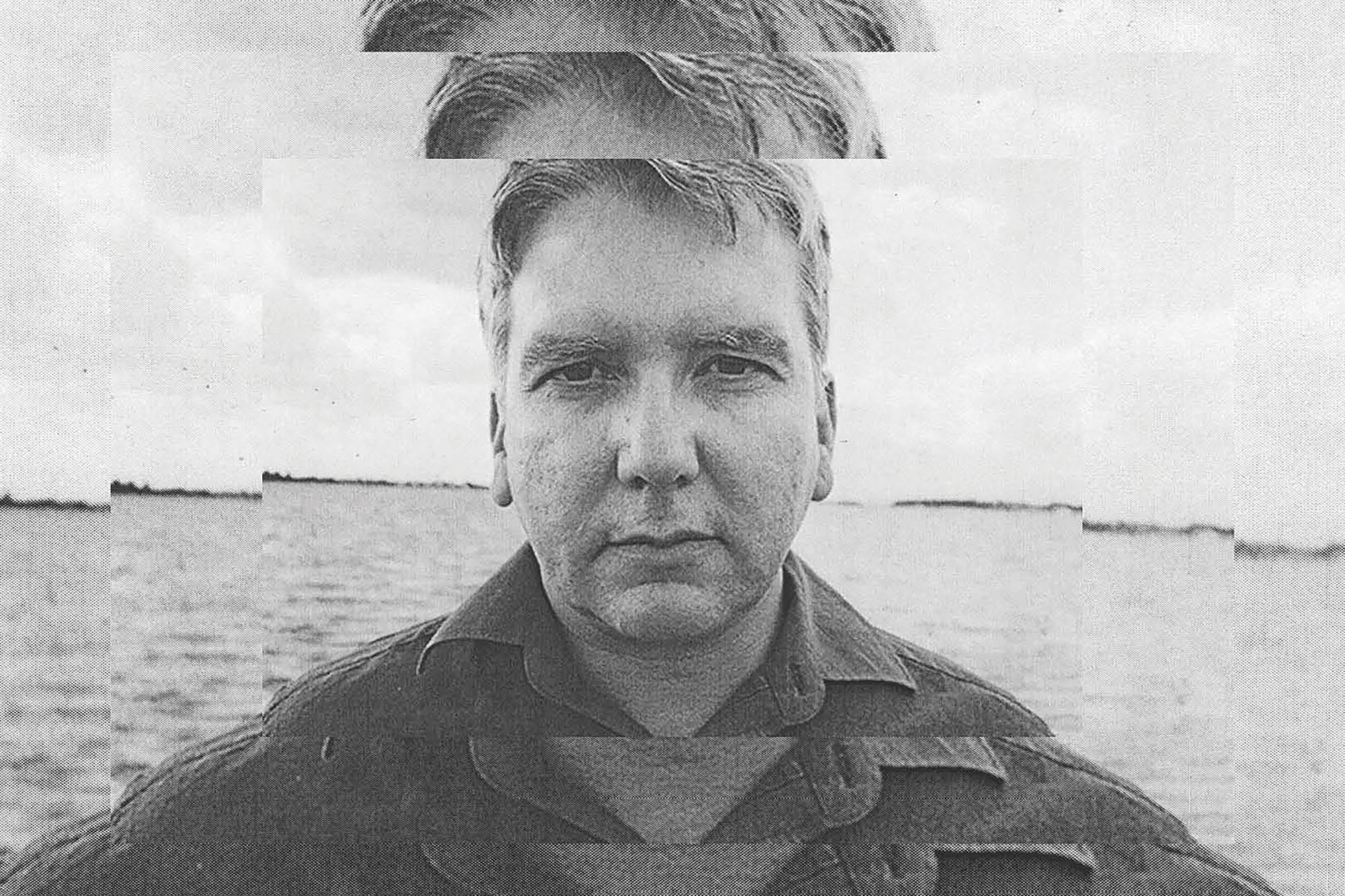
Now, given the ton of new musical and cultural forms that emerged in the 2010s, how does Fisher’s statement on the disappearance of cultural resources hold up? I think it’s fair to say that his writing from this period misjudged the cultural resources still available in the decade ahead. We could look at anything from EDM and hyperpop, to emo rap, to djent, to more local movements like the London Jazz and UK Drill scenes, or frankly anything else from that era that has been fully consecrated into the musical canon, to see that, no, novel cultural production does not stop, it does not stagnate, it just changes depending on the cultural landscape it emerges out of. In other words, innovation doesn’t stop, but how it manifests shifts depending on the particular material conditions of that era. This was something Fisher definitely recognised, as he writes later in the article:
“Needless to say, it is not that technology has ceased developing. What has happened, however, is that technology has been decalibrated from cultural form. The present moment might in fact be best characterised by a discrepancy between the onward march of technology and the stalling, stagnation and retardation of culture. We can’t hear technology any more. There has been a gradual disappearance of the sound of technological rupture”
In other words, Fisher’s claim is that there is something particular to the time he was writing that led to the deceleration of cultural production relative to technological development. To him this was a unique scenario at the beginning of the 21st century, but as we can see in the RA video and article above, these same questions appear again and again throughout the decades. What Fisher failed to consolidate into his world view was the ongoing tension between technological development and cultural production that has taken place throughout history. One of the key thinkers on this idea is Bernard Stiegler, who claimed that: “industrial civilization rests on an ever more intense development of the process of permanent innovation. It results in a divorce, if not between culture and technics, at least between the rhythms of cultural evolution and the rhythms of technical evolution. Technics evolves more quickly than culture” (TT1, 15).
To some extent this rings true with Fisher’s idea of capitalist realism, but it also calls into question his assumption that culture should progress in parallel with technological development. If the divorce between cultural evolution and technical evolution is a fundamental aspect of technological progression, the problem today is not so much the deceleration of culture that Fisher mentioned, it’s precisely the opposite. Technological acceleration has reached a point where much of cultural production, and the archive that contains it, cannot keep up. It’s not that the cultural resources are running out, it’s that they are oversaturated. This does not stop new cultural forms being created, but it makes them more short-lived and ephemeral, lacking the shared technological apparatus to consecrate them into a monocultural understanding.
In terms of music, this leads not so much to wide giant leaps in innovation as we saw in the decades of the twentieth century, but ever more smaller changes that can add up over time to change culture over time. This is exactly what Szatan is describing when he notes:
“What used to feel like solid land has given way to an archipelago of disparate scenes with little awareness of their neighbours and, broadly, only slight modifications to preexisting sounds. That suits the already keyed in, but it makes following the underground hard work and locks out younger listeners who bring the fresh perspectives culture is crying out for.”
So, is there really no sound of the 2020s? Or is this a panic we go through when we can’t understand how the increasing technological changes affect the culture of contemporary society? As we have seen, this is very much a question of archival technologies as much as anything else. For Stiegler these include virtually all technics, from writing to advanced computer technologies. The problem therefore becomes, what do we do when this archive is starting to break down? In an ever more transient world of digital culture, where global micro-scenes disappear almost as quickly as they emerge, and all future production is looking likely to be either mediated by, or used to train AI models, what can we do to make sure the archive is the foundation for the future we want to build?
Here Szatan discusses some interesting solutions:
“Pressure campaigns? Open-source repositories? An endowment fund to centralise all culture reporting, music journalism, user uploads, social media and forum threads? … Even a modest investment by some of the world’s largest record companies might build an ecosystem that could work as a digital Library of Alexandria. … If we can allocate resources to safeguard the past while rousing ourselves to embrace the future, no matter how farcical it might feel at this moment in time, culture will benefit. Technopessism is merited, but too easy; try and claw your way to technorealism.”
This idea of technorealism is a very important point that gets to the heart of questions in this article, and links the two RA articles neatly together. To me, technorealism means an acceptance of the fact that technology and culture are not always in parallel alignment, but that this is not a terminal diagnosis. The sounds of the future will always still emerge, but in order to recognise them we have to be more aware of the archival abilities of the technologies we use, whether that be the very categorisation systems in platforms like spotify, or the critical analysis of cultural periods. We must refuse both naive optimism about technology’s redemptive power, but also the cultural pessimism of capitalist realism and hauntology. To me, this means recognising that the archive isn’t something that happens to culture after the fact. We are building it right now, through every playlist we curate, every critical essay we write, every artist we champion, every scene we name and preserve.
So is there a sound of the 2020s? Maybe not in the way we’ve learned to recognise sounds of previous decades. But that doesn’t mean there’s nothing to hear. It means we, the listeners, the critics, and the archivists, have work to do. The sound of this decade won’t only reveal itself in 2040. It’s being constructed right now, in real time, through the choices we make about what matters and what gets preserved. And if we approach that responsibility seriously, with the technorealism Szatan calls for, then the sound of the 2020s won’t be a mystery. It will set the scene for the future we decide to build.

