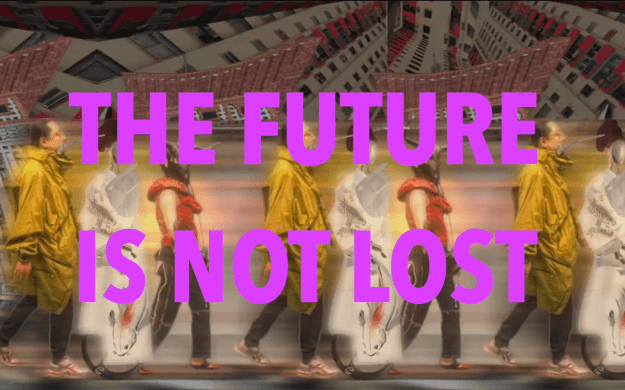
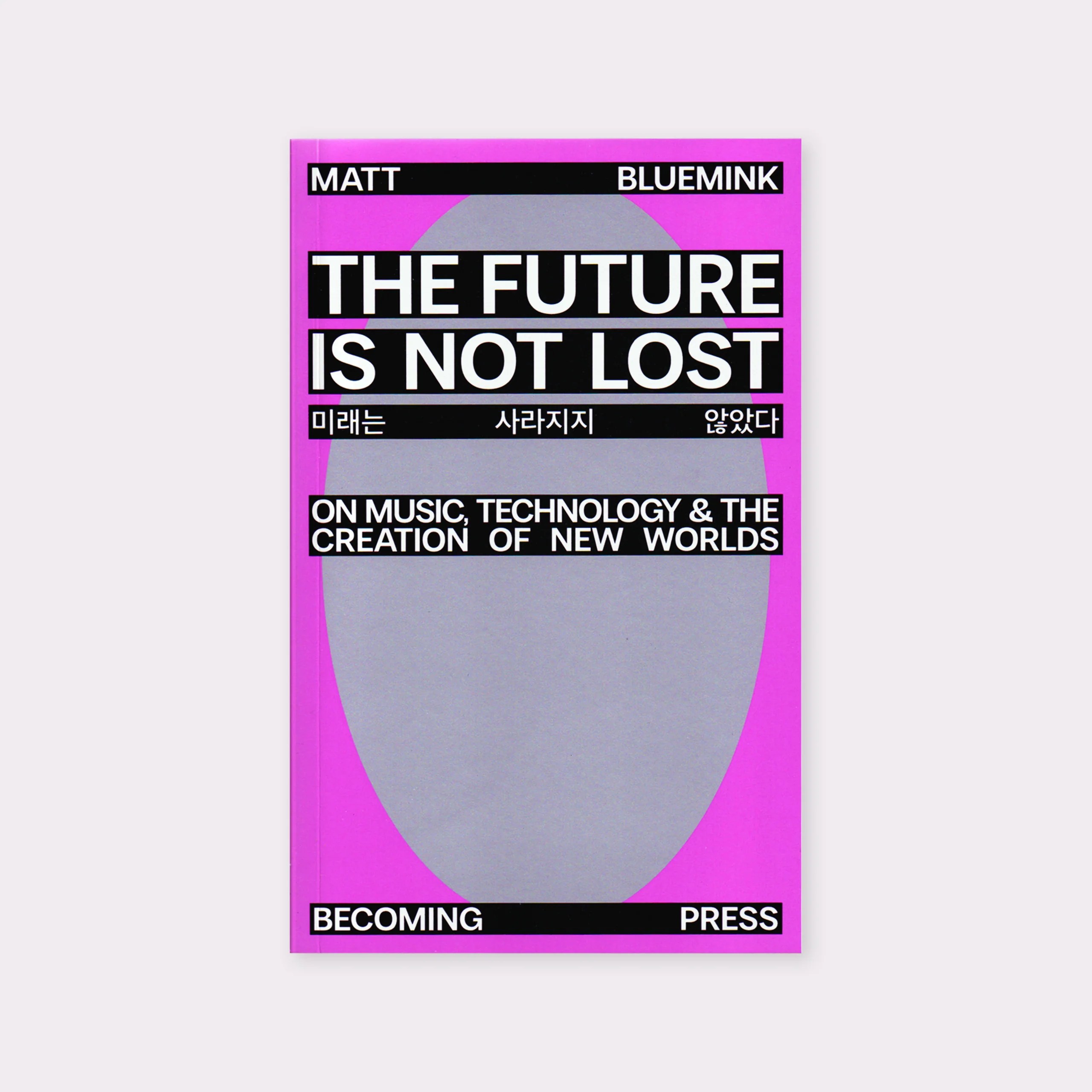
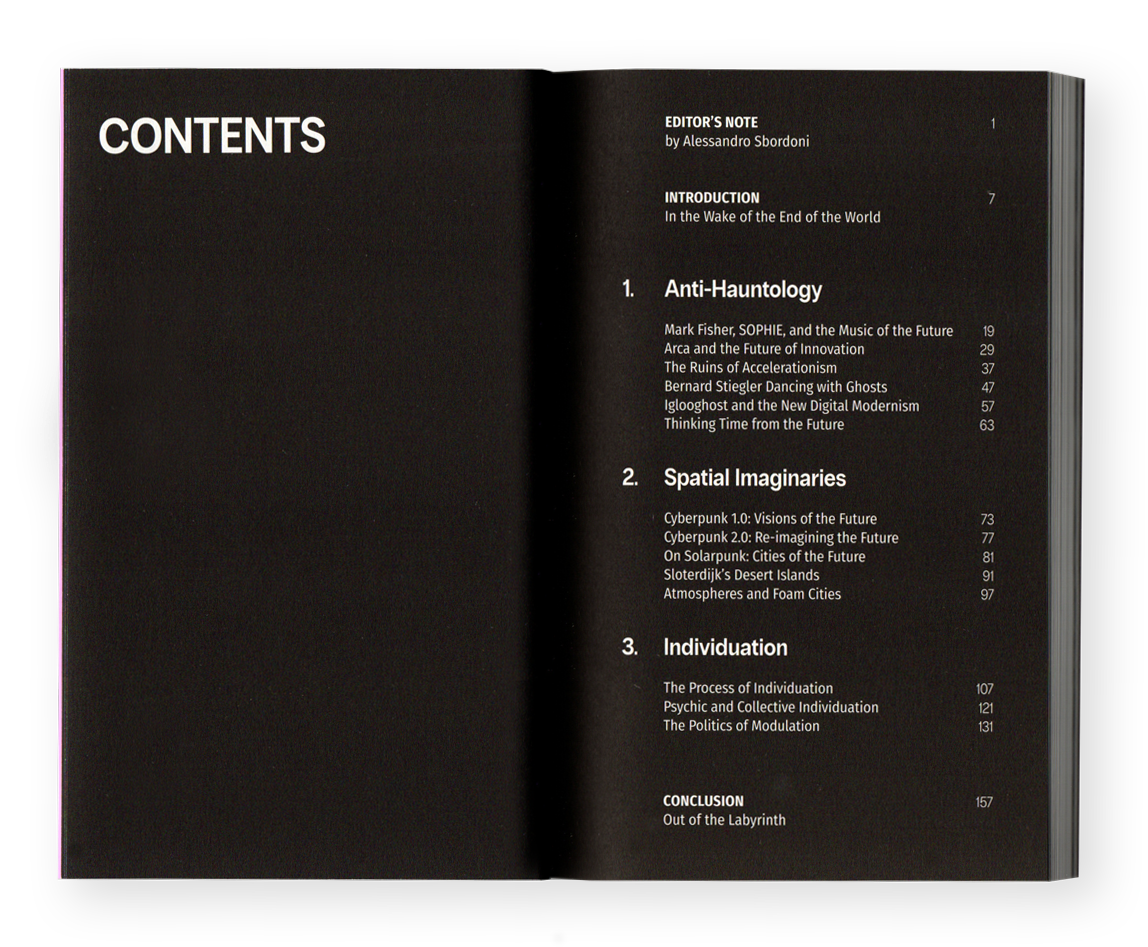
It’s finally here! The official release date for my new book The Future is Not Lostis 24th of June 2026. The book is a collection of my essays focused around the idea of the future as it relates to music, technology, architecture, and philosophy. The book itself is split into 3 chapters on a variety of interconnected themes:
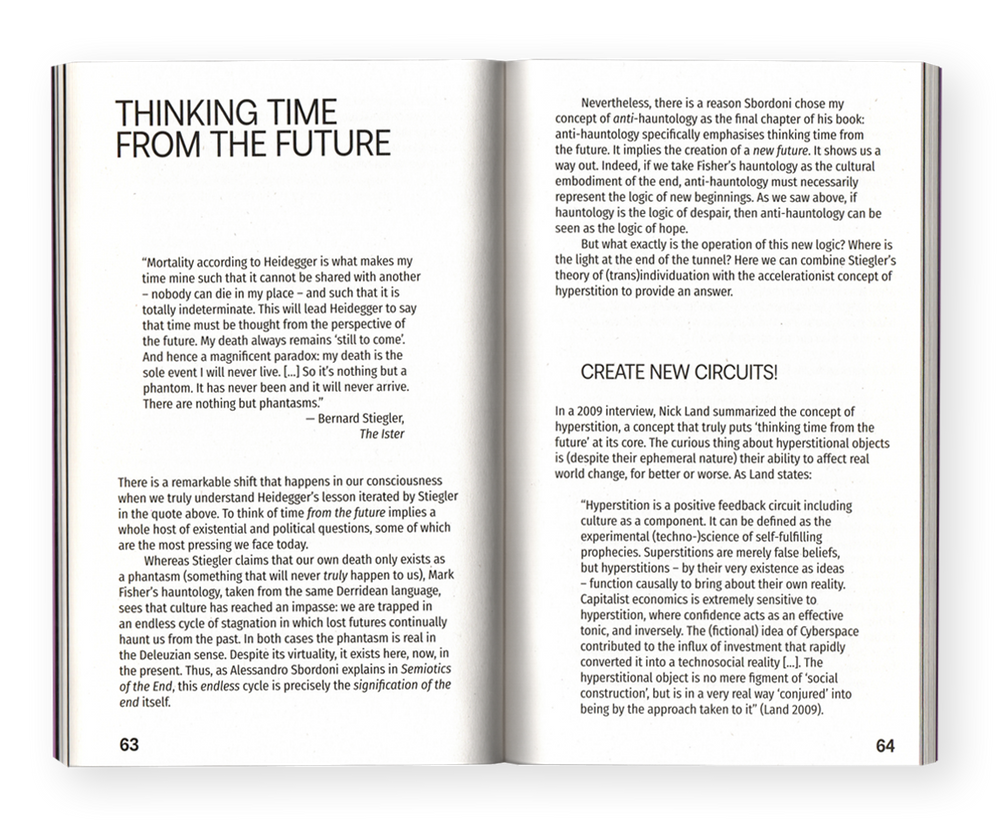
1. Anti-Hauntology: The first section explores the idea of ‘futuristic music’, including artists like SOPHIE, Arca, and Iglooghost, and provides a critique of the nascent pessimism in the work of Mark Fisher through the philosophy of Bernard Sitegler.
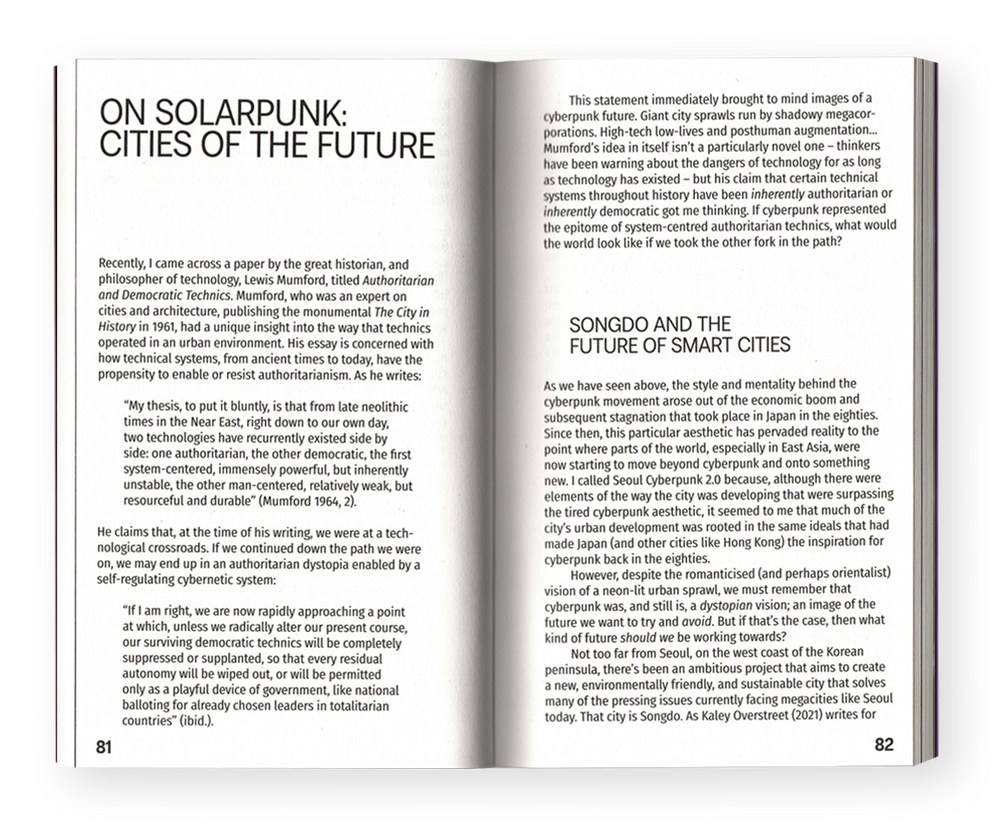
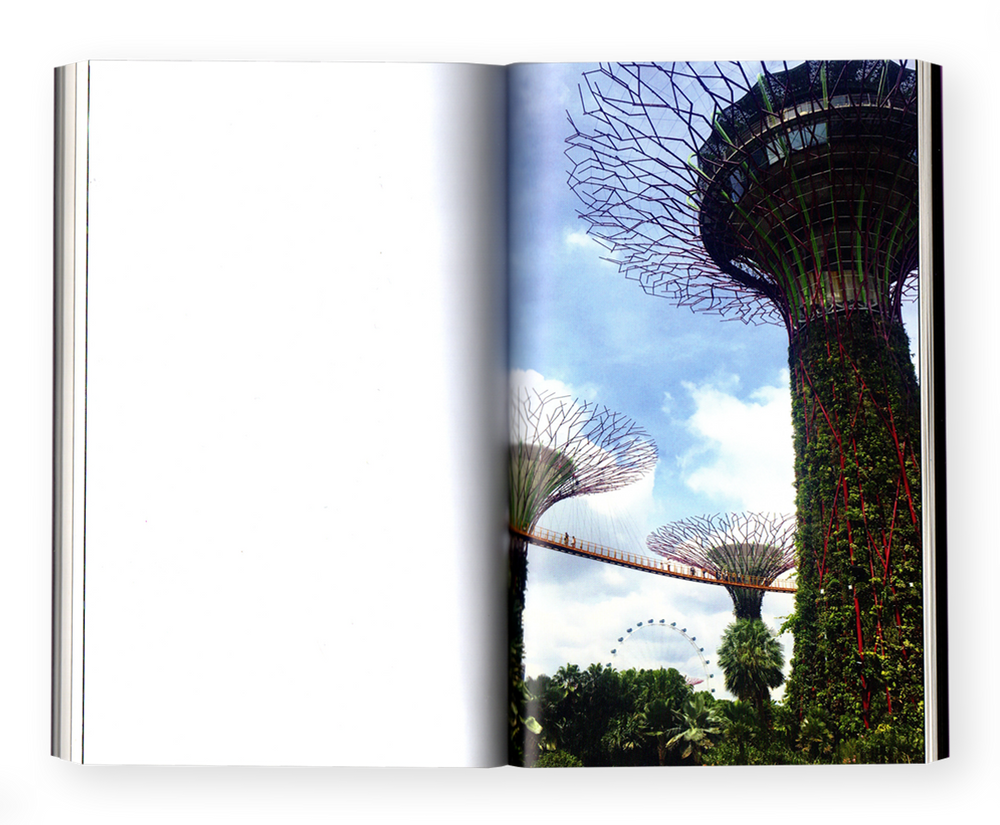
2. Spatial Imaginaries: The second section uses the ethos of solarpunk to criticise the dystopian aesthetic of cyberpunk that has become actualised, not just in films, literature, and games, but in architecture and urban design. It also provides a reading of Peter Sloterdijk’s theory of foams, atmospheres, and desert islands to show how spatial philosophy can provide solutions to the climate crisis.
3. Individuation: The final section introduces the work of Gilbert Simondon and its influence on Bernard Stiegler and Gilles Deleuze. This section provides the theoretical underpinning of many of the previous chapters. It shows how individuation, conceived as an on ongoing metaphysical process, can lead to a fundamentally progressive form of understanding which allows for the creation of better futures.
Here you can find the trailer for the book (because after all, why shouldn’t books have trailers?!):
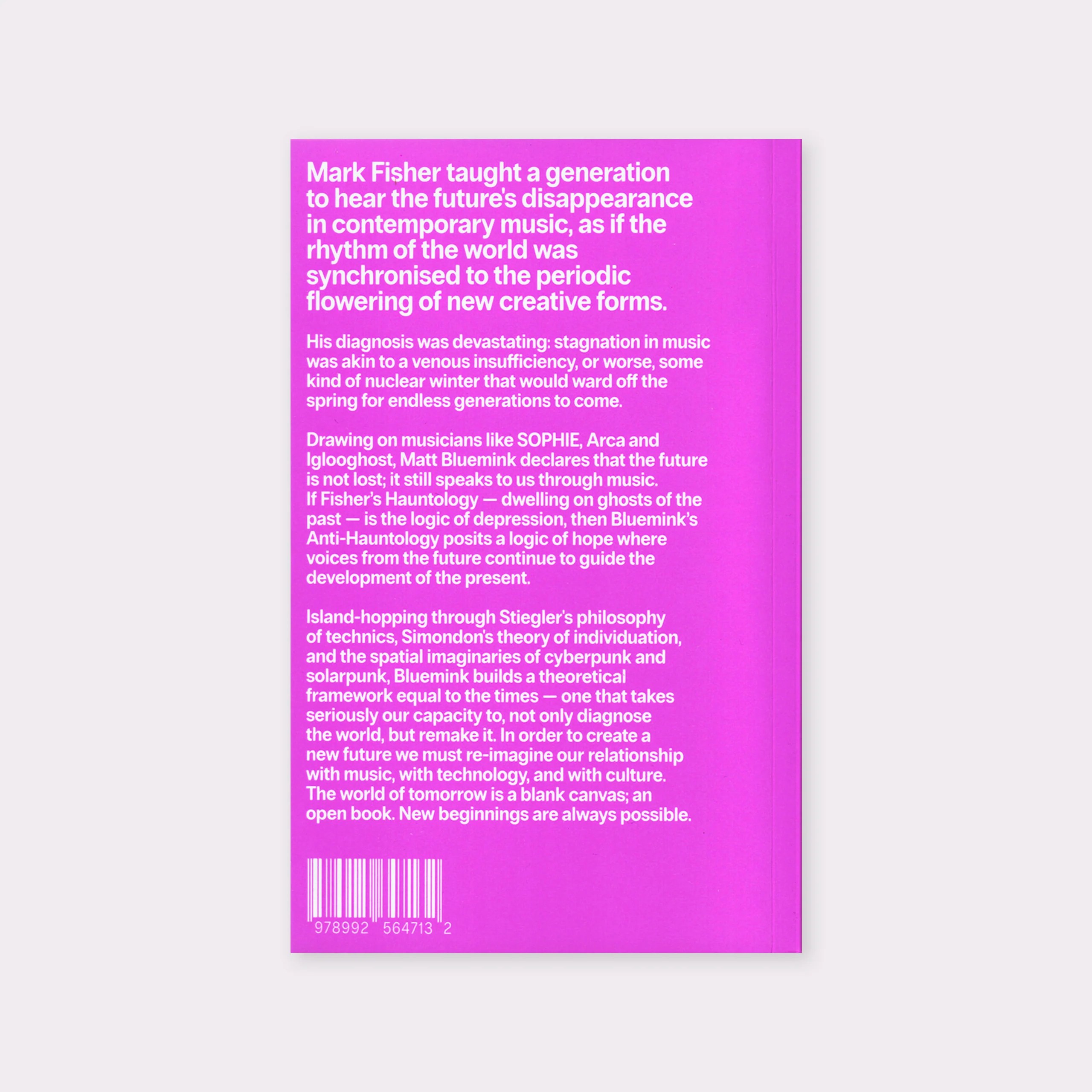
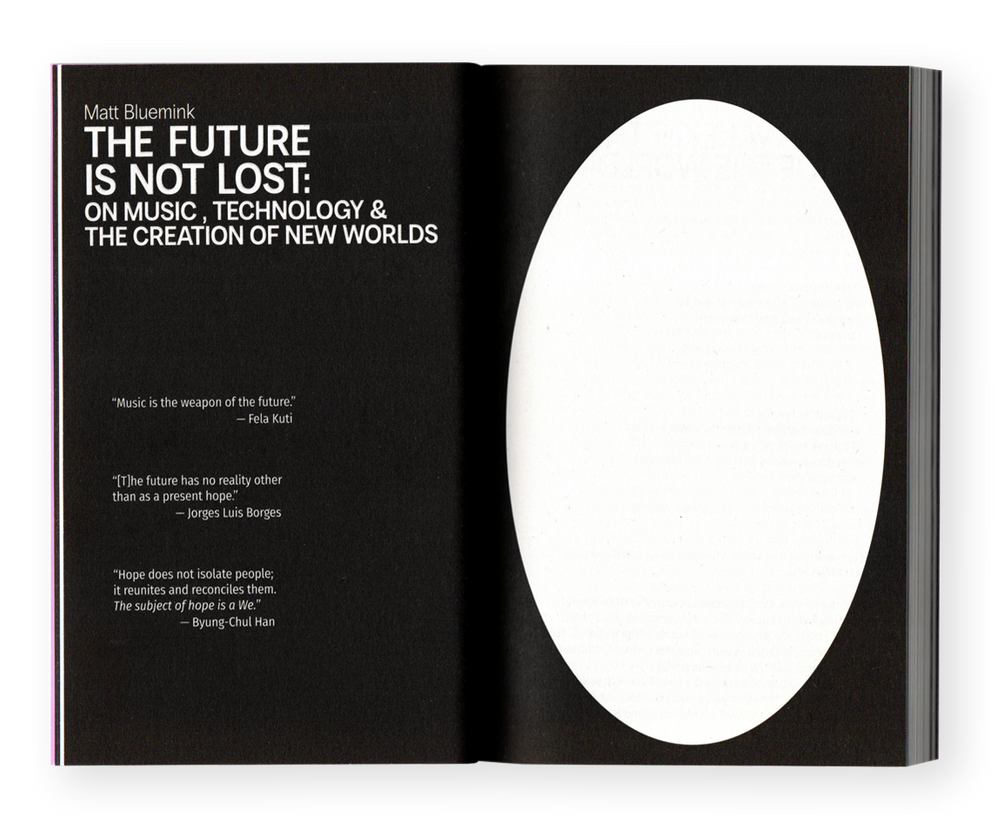
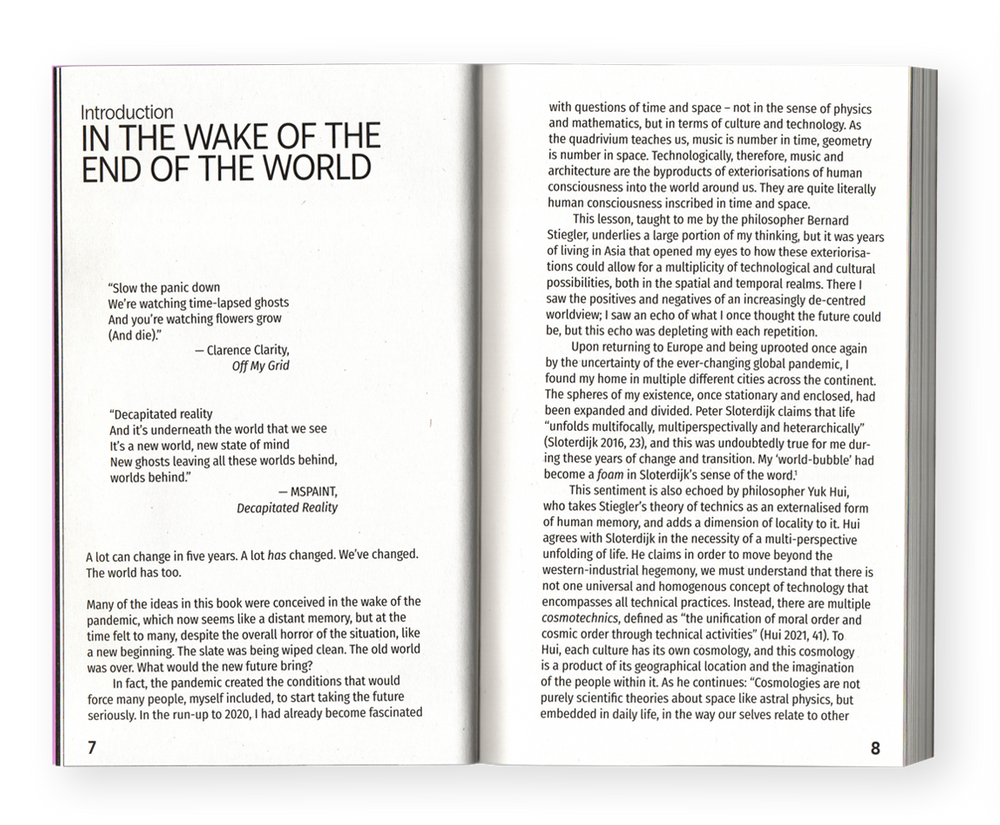
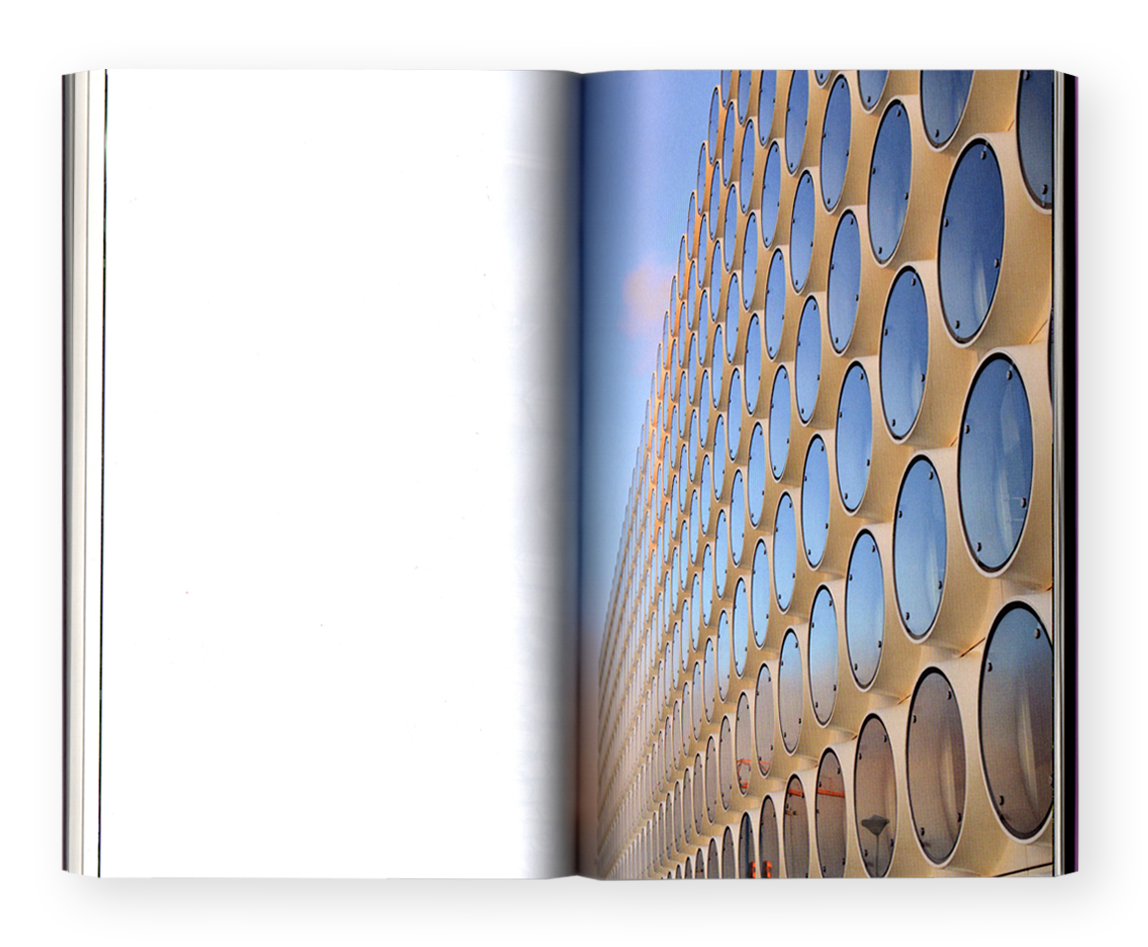
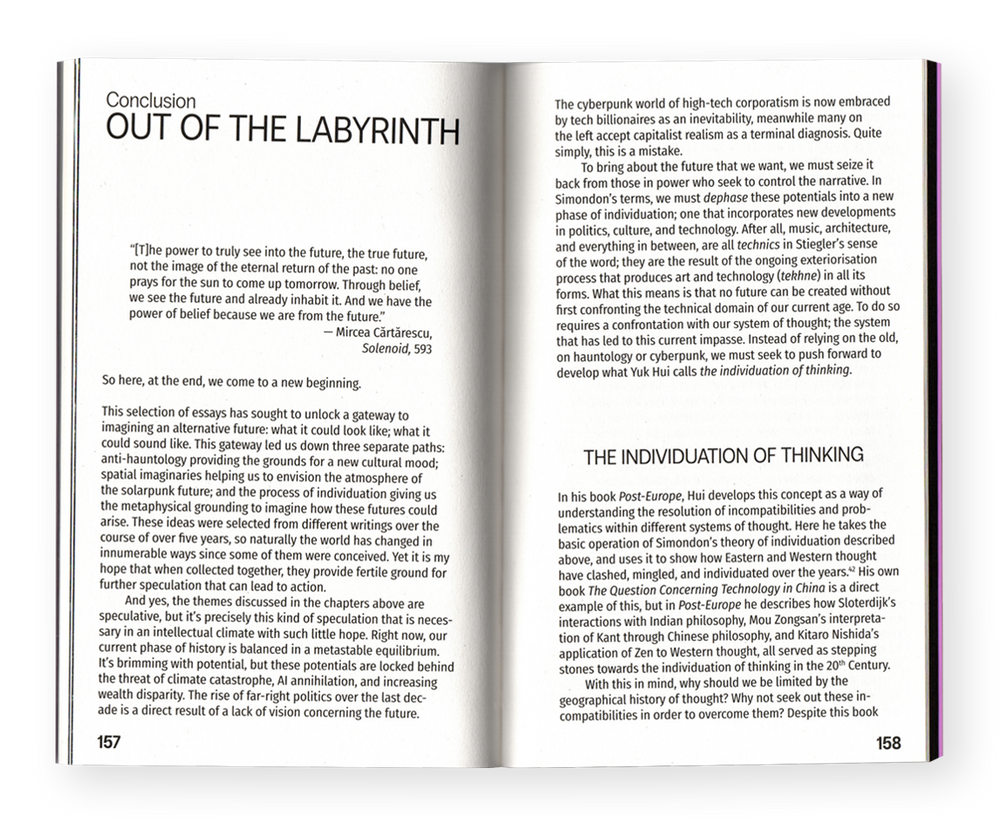
The Future is Not Lost is published by the brilliant and radical becoming.press who have been a pleasure to work with through every step of the publication process. If you’d like to purchase a copy of the book, use this link. Below I’ll leave a few quotes from the introduction, and a selection of pictures to give any potential readers a taste of what to expect. I hope you all enjoy it!
“Music, that most fundamental human technology, also has the power to break down any arbitrary boundaries we build for ourselves; it shoots across state lines and finds its way across the strictest borders. As Bernard Stiegler writes, music “weaves itself into the thread of time” (2010b, 36). It is the technology of the ‘soul’.
However, to Stiegler, music’s power is a double-edged sword, a pharmakon. While music has the unusual ability to synchronise the time of consciousness, the music industry, like all culture industries, extends this power until it becomes global; it uses its power to standardise behaviour and enhance consumption of its own products. In the lead-up to the pandemic years, the scope of music criticism within the field of critical theory was stuck in echoes of the past. Perhaps music’s revolutionary potential was still there, waiting in the wings, but its wings had been clipped by the homogenising tendencies of 21st Century capitalism. If this was true, what would happen to the music of the future?
…
These ideas resonated strongly with the writing of perhaps the most popular and sharpest cultural theorist of the last twenty years, Mark Fisher. I’d read Fisher a few years before, and despite being interested in his writing and the style of his critique, I was altogether unconvinced by his arguments. As a gateway to continental philosophy and critical theory, he was a master, but many of his writings on culture, in particular music, seemed unnecessarily pessimistic. This pessimism, it felt to me, was not wrong per se, his analysis was extremely astute on a lot of issues, but it was precisely the wrong solution to the problem he presented. ‘The present’ to Fisher had become a boring dystopia; a world that had left the hopeful cultural movements of the early nineties behind. Hauntology was his solution, but it felt limited, constrained, and overall unsatisfying. It had diagnosed a wide ranging cultural malaise without prescribing an antidote; it embodied the logic of depression by trapping the very idea of the future in a constant referential loop with the past. Any potential step forward was just a rehashing of what had come before. A remix or a remake of a time when the future looked brighter. Lost futures, lost futures, lost futures…
It was around this time that I first discovered the electronic music producer SOPHIE. From the very first moment I heard SOPHIE’s music I knew it was something different. It felt fresh. It felt new. Listening to Faceshopping was like being transported into an alternate reality that approached popular music from a radically novel perspective: a transgressive perspective. The old structures and forms were there, but shifted, changed, and morphed into something unrecognisable. Electronic music was finding a way forward, not only in some distant, abstract or academic sense, but in popular culture itself. Aspects of the experimental and avant-garde were being brought into popular consciousness in entirely new ways we couldn’t have expected. I had discovered the music of the future.”
“So, the world had in some ways become cyberpunk, but just like hauntology, cyberpunk had become a closed circuit, a short-circuit, a self-referential depiction of a future that’s already past its sell-by date. Nonetheless, it seemed that there was a glimmer of light in all the dystopian darkness, a crystal seed from which a new future could emerge. Perhaps we could reconstruct the city and its culture in such a way that would move us away from cyberpunk dystopia towards something brighter. If the cyberpunk of the 21st Century is the spatial embodiment of hauntology, a retro-futuristic vision of the new, hiding in the shadow of eighties and nineties nostalgia, what if we took the logic of hope that is present in anti-hauntology and applied it to this aesthetic vision of the city? Here we arrive at solarpunk.
Solarpunk is an aesthetic vision, a movement, and a virtual source of hope for tomorrow. In the terms of the cyberpunk theorists it can be seen as an eco-technological projection of a future that could still come to pass; a hyperstitional entity, the very existence of which could lead to its own actualisation. Like anti-hauntology, solarpunk embraces the new, the fresh, and the radical. It is the logic of anti-hauntology applied to space; it breaks free of the Western-industrial world order in a way that would satisfy Yuk Hui’s need for a techno-diversity. A truly solarpunk world would embrace vernacular knowledge and practices to build a world that is truly adaptable to its environment.”
“The theory of individuation is a complex and multifaceted concept that in one way or another underpins many of the ideas in the chapters ahead. From Simondon and Deleuze, to Stiegler and Hui, the reconceptualisation of the individual as a process of individuation is a fundamental cornerstone of this book. However, as we move to the third section, we mark a rupture or a break in the flow of ideas. We move one ontological level down to something more fundamental. Where the first two sections are concerned mostly with cultural analysis, specifically with how our ideas of the future could affect the present, the third and final section returns more specifically to the realm of philosophy proper; it looks to metaphysics to analyse the fundamental processes that allow the present to emerge from a sea of potentialities.
…
From the cultural theory of the future, we have come full circle. Unlike the first two parts of this book, this third section exists somewhat out of time. It is a grounding; a framework. It’s the explication of certain resonances that emerge when bridging the gap between the cultural and the metaphysical. Each of the thinkers discussed here agree in their own way that this divide should be overcome, and to me, the mechanism through which we can do this is the process of individuation.”



Pingback: Decadeology: Hyperpop, Archive Fever, and the Sound of the 2020s – Blue Labyrinths