
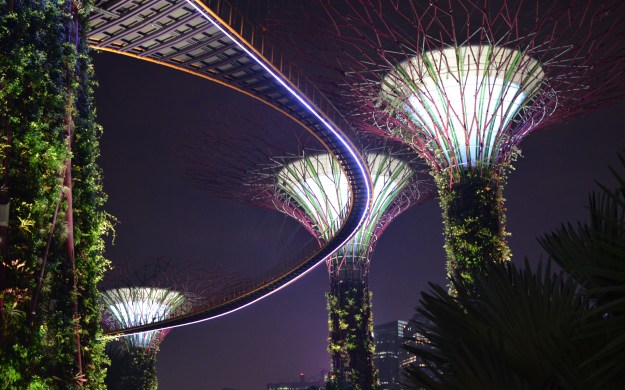
In the introduction to The Future is Not Lost: On Music, Technology, and the Creation of New Worlds (2026) published by becoming press, I trace the connections between the solarpunk movement and anti-hauntological music. Here I argue that anti-hauntology, which can be used to describe forward thinking music genres that push the boundaries of what could be considered ‘popular music’, acts as a counter weight or a remedy to Mark Fisher’s concept of hauntology.
Hauntology is centred around the idea that popular culture has been trapped in a cycle of endless repetition. Remixes, remakes, and rehashes of the past are now the predominant form of cultural production. To Fisher, this has led to a kind of cultural stagnation where would-be-progressive music is stuck mourning a future that never came to pass; a lost future (think Burial, Boards of Canada, and The Caretaker).
Anti-hauntology, on the other hand, highlights ways in which we can move beyond this cultural malaise, both culturally and politically. Forward thinking progressive music doesn’t have to be stuck re-interpreting the past, it can forge new paths forward, looking to combine the avant-garde with the popular in entirely new ways (think SOPHIE, Arca, and Iglooghost).
As I summarise in the chapter ‘Thinking Time from the Future’:
“anti-hauntology specifically emphasizes thinking time from the future. It implies the creation of a new future. It shows us a way out. Indeed, if we take Fisher’s hauntology as the cultural embodiment of the end, anti-hauntology must necessarily represent the logic of new beginnings … ‘if hauntology is the logic of despair, then anti-hauntology can be seen as the logic of hope.’”
Looking at this it becomes quite clear that anti-hauntology shares this underlying logic with solarpunk. After all, what is solarpunk if not a vision for a new beginning; the creation of a new future? In The Future is Not Lost I claim that solarpunk’s aesthetic vision can be seen as an eco-technological projection of a future that could still come to pass. In the terms of the cyberpunk theorists (Fisher, Nick Land, Iain Hamilton Grant etc.) it is a form of hyperstition: the very idea of which has the potential to bring in an influx of investment, both in terms of libidinal energy and capital, that could eventually actualise itself into reality. (See examples of solarpunk inspired building projects in: From Cyberpunk to Solarpunk: Technics and the Cities of the Future.)
But in this artice, rather than getting bogged down in the philosophical weeds of how exactly this could take place, I want to instead focus on the music. Despite the fact that there seems to be a very distinct crossover in the underlying logic of anti-hauntology and solarpunk, imagining what might constitute a ‘solarpunk music’ is a question that has not really been addressed in any substantial way.
Sure, there have been attempts to create solarpunk music over the last few years: on youtube you can find a whole variety of projects which often focus on a kind of hopeful form of ambient music, as we can see below:
But to my mind, if we are to take solarpunk seriously, we must move beyond these kinds of retrofuturistic dreamscapes that could have easily been imagined in the 90s. Solarpunk culture can be about more than just utopian cityscapes, it can become the collective embodiment of the future we want to build. Indeed, because solarpunk is at its heart a collective movement, the music and music culture surrounding it must be inherently pluralistic. There is not just one genre that defines solarpunk music, it is a general approach towards cultural production that we can take forward into the future.
What this means is that solarpunk music can embrace the -punk aspect as much as the solar. Solar-punk is meant to be rebellious, forward thinking, and subversive to current oppressive systems of power, much like the original punk movement. It can embrace a whole variety of genres to show us what a hopeful vision for the future looks like. As I wrote previously: “It’s not about rejecting technology, but embracing the connection between man, technology, and nature to imagine how we might want to live.”
Solarpunk Artists
To my mind, there are a few key elements that would allow any form of music to fall under the solarpunk banner:
- A sense of hope. This can be in terms of lyrics, it can be in terms of musicality and composition, or it can be purely aesthetic.
- Embracing technological progress and tradition. This can be in terms of combining traditional analogue instruments with electronic ones. It can also be creating forward-thinking ways to use electronics to utilise organic sounds etc.
- Subverting the zeitgeist. Solarpunk music has to be innovative and creative, subverting established genres in the process. This is obviously up to interpretation, but to me this would include elements of anti-hauntological music.
No artist needs to have all three to fit the bill, any of them will do. I know there are an infinite number of bands, songs, and genres that fit this description, nonetheless I want to kickstart the conversation by suggesting a few who came to mind for me.
Three Trapped Tigers
Three Trapped Tigers were the first band that came to my mind when I became aware of solarpunk a few years back. The London three piece recently played their final show at The Electric Ballroom and it’s fair to say they blew the roof off the place. When TTT came out with their first EPs back in the late 2000s it really felt like their blend of chaotic mathy guitar work and sweeping synths, backed up by Adam Betts’ highly original virtuosic drumming, was something radically new, and even today, over 15 years later, the band still sounds fresh and forward thinking.
TTT takes so many influences from so many different genres and styles ranging from math rock, to classical, to IDM, and metal, yet much of their music comes across as hopeful or uplifting, which is a rare quality in experimental music, and it’s this quality that I think makes them a prime candidate for a kind of solarpunk music.
Take the tracks ‘6’ (above) and ‘Reset’ (below). To me it’s undeniable both of these would fit right in a utopian solarpunk cityscape. The sonic palette of electronic textures and alaogue instrumentation, combined with elements of an optimistic, quasi-sci-fi aesthetic truly capture what a hopeful future could sound like.
MSPAINT
MSPAINT are a hardcore band from Mississippi that subvert the typically guitar driven genre by replacing electric guitars with synths. The heavy electronics definitely help to create that techo-futuristic sound in much the same way as Three Trapped Tigers, but what stood out to me about the band, and why I think they are a perfect fit for the heavier side of solarpunk music, is the lyrics. Singer Deedee Kern combines his aggressive hardcore vocal style with poetry that’s full of a hope for new beginnings. We can see that even in the track titles such as ‘Titan of Hope’ and ‘Flowers from Concrete’, but also in the lyrics themselves:
“Opening up to the way that we feel/ The hardest things to speak on are real/ But we’re not scared anymore/ We’re not scared anymore/ And this mindset is a Titan of Hope/ Go!
Let your mind out that gate/ Let your mind out/ You just might find out/ That you’re connected to everything/ You’re connected to everything”
The anti-capitalist, future focused, and often utopian bent of the lyrics, combined with the synth-hardcore instrumentation make MSPAINT the true embodiment of solar-PUNK. No matter how bad the current situation, in the world of the future, flowers will grow up from the concrete:
Yosi Horikawa
Now taking a different approach from the punk inspired futurism of the bands above, we move to Japanese musician, sound designer, and producer Yosi Horikawa. Horikawa’s approach to electronic music revolves heavily around a unique approach to sampling which involves traveling to various parts of the world to gather field recordings from the unlikeliest of natural sources. He’ll move from collecting samples of insects in Thailand, to recording farmyard animals on a remote mountain in Chiba, Japan, to making music from a riverboat in The Philippines. But what’s maybe the most interesting thing about Horikawa is the way he utilises these sounds. As Montreal Mutek described, he “finds rhythm in seemingly everything, from kitchen utensils to random birdsong, weaving in more DIY sound concoctions to create music that compels while confounding, ultimately absorbing listeners in its eclectic, maximalist joy.”
Horikawa creates peaceful audiophilic masterpieces that embrace both nature and technological progress. He finds innovative new ways to combine natural sounds to make something that sounds like the future, and for that reason, he absolutely fits the bill for solarpunk music.
Brighter Futures
These artists were the first that sprung to mind when I tried to conceptualise a solarpunk music that exists beyond the banal utopian ambience that’s normally associated with the genre. Of course this is a limited selection, but I want to imagine a solarpunk future that utilises a variety of different styles from all different genres; a kind of music that embraces tradition and technology, that subverts the contemporary zeitgeist, and most importantly that gives us a sense of hope for the future we could build together. Solarpunk in that way can be more than merely an aesthetic vision, it can become a collective worldview which, if taken on by enough people, can really start to change how the future comes to pass.
With that in mind, I want this article to serve as a starting point for a discussion around solarpunk music. After all, art has a recursive relationship with the future. The art we imagine becomes the grounding for the future we create. As I write in The Future is Not Lost: “The purpose of this book, therefore, is to provide a theoretical toolkit which facilitates this opening up; it allows for the inventing, composing, sculpting and writing of new futures.” Solarpunk is just one conceptualisation of a world we would want to live in, but it’s up to each of us to bring these ideas to the forefront and imagine how we can create a brighter future.
As David Bowie said: “Tomorrow belongs to those who can hear it coming”.

