
Post-Irony, Jouissance, and Scrolling while Taking a Shit
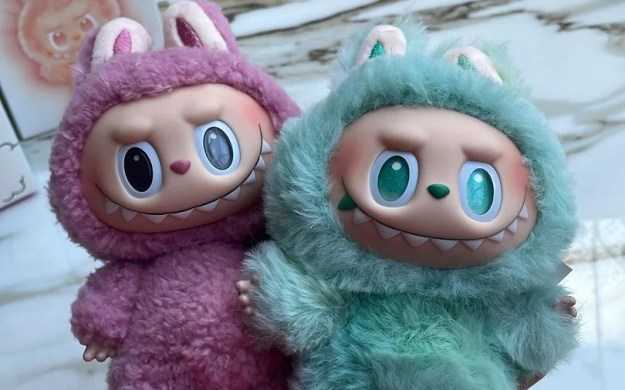
Recently something made me smile: the news that one of those unsettling little dolls — Labubu, designed by Kasing Lung and distributed by the Chinese chain PopMart — was left as a gift on Karl Marx’s grave in London. It’s a gesture deeply rooted in our time, more than simple irony. It signals how the clash between old identities — built on political utopias and forms of social aggregation — and new subjectivities compatible with the aims of capitalism has been resolved.
The post-irony of the gesture is the foundational language of an entire generation. It is disarming, in that it extinguishes and suffocates any attempt to resist oppressive power, yet accepts it and merges with the dominant structure. As Mark Fisher argues in an essay now read by anyone between 18 and 45 (Capitalist Realism, 2009), the backbone of capitalism is its ability to make us incapable of imagining a plausible alternative to itself that is, to absorb every form of refusal and reintegrate it into the dominant system. Labubu grins with grotesque relish at everything that was once taken seriously.1
What is it, if not a morbid pleasure, that we feel when we send each other memes in which we pity ourselves and portray ourselves as deserving of pity, relieved by the awareness that we feel exactly like everyone else? Powerless. Why do we enjoy this so much? And why in the same way?
More than a distraction, it is a defense mechanism. Let’s start there. If there were nothing to distract ourselves from, there would be nothing to enjoy. Alfie Bown, in Capitalism and Candy Crush (2019), identifies enjoyment, the constant pursuit of amusement, as an antidote to alienation. This concept, first developed by Marx himself 150 years ago, is still a cornerstone of critical literature.2
Enjoyment, or jouissance in Lacan’s terms, is both a process and a specific moment through which we structure our sense of self. Enjoying ourselves by playing Candy Crush, as my mother does, or by scrolling Instagram reels, as I do, is a practice of construction no less important than deciding what to wear or who to vote for. As Slavoj Žižek writes (1997), enjoyment is precisely what keeps us within the system.3
Unboxing Labubu, scrolling apathetically, playing Candy Crush, empathizing with the profile Affirmations – Global Self Hypnosis all betray an awareness of the pain tied to enjoyment. It is precisely our inability to grasp reality in its entirety that makes us joyful. Or rather, that pushes us to seek a distracting pleasure or a pain to which we are anesthetized. Thus, the resulting overstimulation we suffer from, due to fragmentation and the uncontrolled flow of stimuli going on all the time on our screens.
When we are in class (or at work, at the cinema, in the hospital, in the square protesting), scrolling through the feed is nothing more than a bodily impulse instantly satisfied, no more and no less than muscle memory. Distraction is the way we come to terms with reality. It is a foundational aspect of our lifestyle, not a diversion from it. If I didn’t take my phone into the bathroom, I would probably find the simple act of taking a shit uncomfortable or boring. Without my phone, I wouldn’t know what to do with my hands, my time, my body when I’m bored, when I feel out of place, when I don’t know anyone, or when I’m traveling by train, or simply eating alone.
The absence of time, space, and silence that comes with systematic exposure to a distraction that does not distract but instead becomes the focus, the normal condition we must deal with, is a constant alienation from which it is impossible to escape. The pursuit of instant gratification is both a symptom and a cause of how we interact with machines and with each other.
Labubu dolls are just one example of how we deal with alienation. The dopamine release from unboxing, the satisfaction of material possession, the obsessive persistence of collecting combined with the awareness that it will soon mean nothing, that every astronomically priced Labubu is destined to become trash, all reflect the elements of a culture in which the goal is to seek pleasure until we are exhausted by it.4
That painful enjoyment — the core around which this pathological search for the self is built — cannot be separated from the ways in which it occurs, which are inseparable from the schizophrenic demands and distortions of an established system we feel unable to transgress. We are aware that satisfaction comes from something that shouldn’t provide it — scrolling while taking a shit or buying hordes of terrifying figurines after consuming endless “OOTD” videos — and yet it satisfies us all the same. The moment of enjoyment is inexplicable, intense, purely animal. It is a ritual we cannot, do not want to, or are unable to give up. It is the very meaning of pleasure. And it is ideology, rather than pleasure, that becomes the instrument of meaning. It becomes the stable element we can cling to in the perpetual construction of ourselves.
Our enjoyment structures us, rather than reflecting some “true nature.” There is nothing natural within produced identities, which can always be replaced and influenced by the choices we make. Necessarily and painfully precarious. Enjoyment is achieved through “total adherence to capitalist principles and priorities” (Bown, 2019, pp. 194–196). We are rewarded, thus we enjoy, when we respond to the inputs of the algorithm we have trained to know exactly what to offer us to keep us enjoying again and again.
This is not a loss of individuality, but rather the abandonment of the illusion that we are the only ones constructing it.
The algorithms, which control the media we consume and the tools we use, now hold a monopoly over this pleasure. That is, the ability to construct it based on the information we ourselves provide, knowingly or not, every day. The algorithm is the indispensable extension of our self: an amplified version of our preferences, a friend that always knows how to lift our mood. It does not merely seek pleasure on our behalf; it reshapes our daily life, dictating how that pleasure is also exhausted.
It is not just the time spent hand in hand with the algorithm, but the way predictive intelligence operates, determining our consumption choices. Our enjoyment is neither unique nor singular, because we are not unique; rather, we are defined by the rules of enjoyment itself, by our ability to navigate them without going too insane. In this case, it is the game that makes the players.
Footnotes
- Fisher, Mark (2009). Capitalist Realism: Is There No Alternative?, Winchester: Zero. ↩︎
- Bown, Alfie (2015). Enjoying It: Candy Crush and Capitalism, Winchester: Zero. ↩︎
- Žižek, Slavoj (1997). Enjoy Your Symptom!, London: Routledge. ↩︎
- Han, Byung-Chul (2010). The Burnout Society, Stanford: Stanford University Press. ↩︎
This article was originally published in Italian in Medial Disorders: Interpretive and Non-statistical Compendium of Technological Disorders, Vol II (Inactual, 2025).
Giovanna Di Pietro (Naples, 2000) is a freelance writer and multimedia artist. Having lived across Europe and Latin America, she combines journalism, visual arts, and photography to explore fragmented individuality and its ties to others.
 Blue Labyrinths